

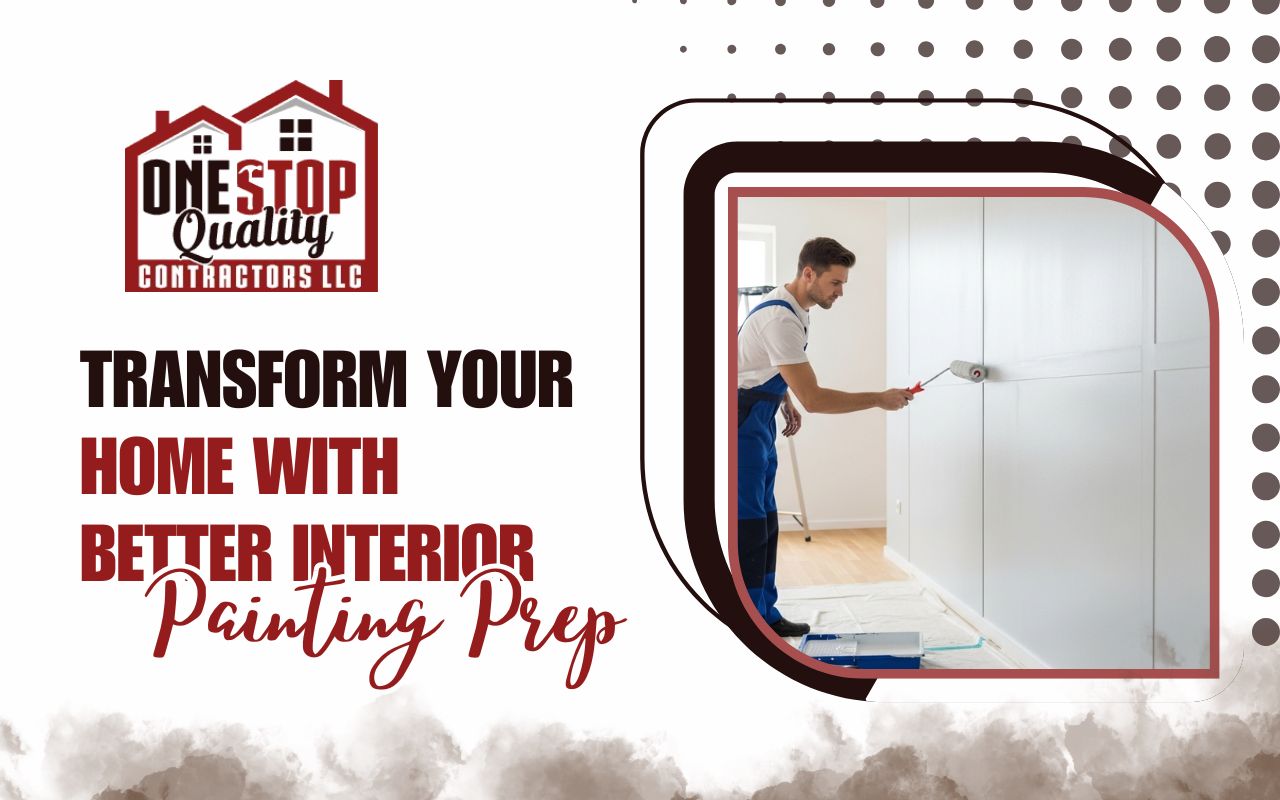
Transform Your Home With Better Interior Painting Prep
Interior painting prep helps us create clean, smooth walls that hold color well. At One Stop Quality Contractors LLC, we know good results start before the first coat, not after it.
With the right plan, you can avoid peeling paint, messy edges, and missed repairs. One Stop Quality Contractors LLC shares simple steps that make each room easier to paint and easier to enjoy.
Start with smart interior painting prep before any paint
Before we open a paint can, we check the room, the wall condition, and the work area. This part matters because strong interior painting prep leads to better coverage, cleaner lines, and a finish that lasts longer.
At One Stop Quality Contractors LLC, we begin by looking for damage, dust, stains, and loose areas. Then we prepare each surface so the paint can bond well and look even from corner to corner.
Follow a simple interior painting checklist for each room
A clear interior painting checklist keeps the work easy to follow. As a result, we stay organized and reduce delays from start to finish.
Inspect walls, trim, and ceilings under good light.
Move or cover furniture and protect the floors.
Remove plates, hooks, and small wall items.
Clean surfaces before patching and sanding.
Gather primer, tape, rollers, brushes, and cloths.
One Stop Quality Contractors LLC uses this kind of order because it saves time and helps every step flow into the next one.
Fix wall flaws early with clear wall prep steps
Walls often hide small holes, dents, cracks, and rough patches. Even so, these issues are easy to manage when we handle them before painting. Good wall prep steps include filling holes, smoothing repairs, sanding patched spots, and wiping away dust.
When we slow down here, the final coat looks smoother and more even. One Stop Quality Contractors LLC treats this stage with care because a flat, clean wall makes every color look better.
How can you protect furniture and floors well?
Protection keeps the job clean and lowers stress during painting. Therefore, we cover floors with drop cloths, wrap furniture, and remove small items that could get in the way.
Use drop cloths that stay flat on the floor.
Cover large furniture with light plastic sheets.
Take off outlet covers and label small screws.
Tape edges near trim, frames, and baseboards.
These simple actions help us move faster and leave the room neat when the job is done.
Choose primer and tools that make painting easier
The right supplies can improve both speed and finish. For that reason, we choose primer based on the wall surface, past stains, and room use. We also use brushes, rollers, trays, tape, and sanding tools that fit the job.
Pick primer for new drywall, stains, or damp areas.
Use angled brushes for edges and trim lines.
Select rollers that match the wall texture.
Keep extra cloths ready for quick cleanup.
One Stop Quality Contractors LLC prefers tools that help us work cleanly and keep the finish consistent across the whole room.
Keep each room ready with a steady painting plan
A simple plan helps us paint in the right order and avoid missed spots. After the room is clean and dry, interior painting prep should lead into careful priming, smart taping, and smooth top-to-bottom painting.
We usually start high, then move down the wall and finish with trim. This method keeps drips under control and makes the work more consistent in every area.
Frequently Asked Questions
Why does prep matter before interior painting?
Prep matters because interior painting prep helps paint stick better, look smoother, and last longer. It also reduces patchy spots, peeling, and extra rework later.
What should be on an interior painting checklist?
An interior painting checklist should include inspection, cleaning, repairs, sanding, taping, floor protection, primer choice, and tool setup. This order helps keep the project simple and complete.
When should walls be cleaned before painting?
Walls should be cleaned before patching and priming. Clean surfaces remove dust, grease, and marks that can stop paint from bonding well.
Do small wall cracks need repair first?
Yes, small cracks and holes should be repaired first. When we fill and sand them early, the wall looks smoother after the final coat dries.
Can a quote help plan a painting project?
Yes, a quote can help you understand the work scope, needed materials, and labor involved. It also helps set clear expectations before painting begins.
Finish strong and request your interior painting quote
Good prep creates better paint results, and that is why interior painting prep should never be rushed. At One Stop Quality Contractors LLC, we believe every room deserves careful planning, clean surfaces, and steady work from start to finish.
If you want a smooth process and a clear interior painting quote, One Stop Quality Contractors LLC is ready to help. With smart prep and simple steps, we turn walls into a clean canvas for lasting color.